
Snapshot: FutuResilience Final Event
4 December 2025

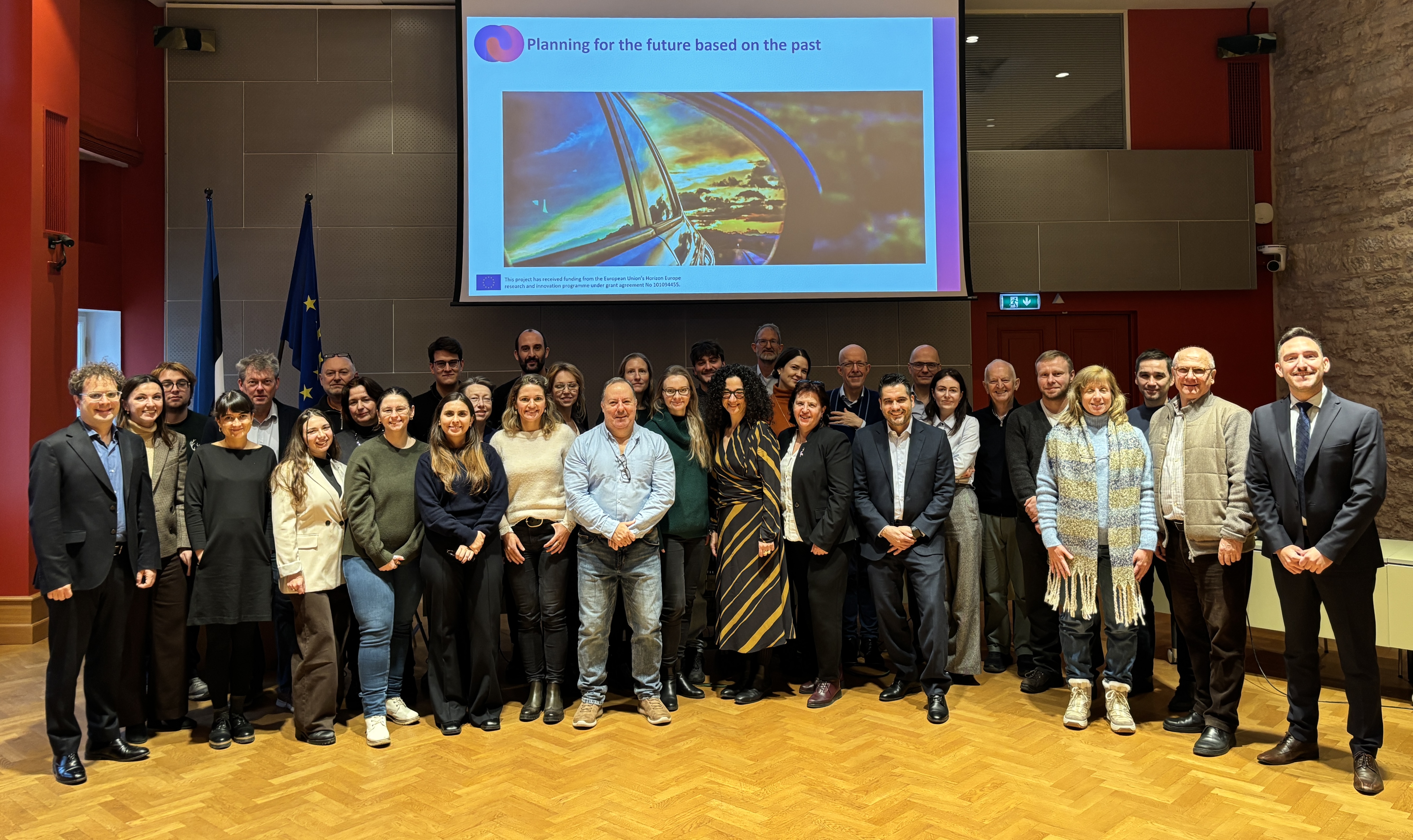
The Parliament of Estonia “Riigikogu” hosted the FutuResilience Final Event on 2–3 December, bringing together policymakers, researchers, and practitioners for two days of discussions on knowledge valorisation for policy uptake, societal resilience, anticipatory governance and innovation. The event was a key moment to present the main findings emerging from the project FutuResilience labs ecosystem.
In her opening remarks, Riina Sikkut, Member of Parliament for the Estonian Social Democratic Party, underlined that the project strength lies in its capacity to integrate diverse perspectives and effectively embed a transdisciplinary approach. Reflecting on the broader context, Riina Sikkut remarked: “The past years show an increase in crises, from energy disruptions to geopolitical tensions, and we still need to plan for the future.” She emphasised the importance of planning based on anticipation rather than reaction.
Invited Keynotes
The event featured three international keynote speakers. Tonurist Piret (OECD) examined the development of anticipatory innovation policy, highlighting anticipatory governance as a proactive approach that integrates foresight, innovation, and continuous learning into public institutions. Finland was presented as a leading example, having embedded anticipatory capacities within its governance structures.
Michal Miedzinski (Joint Research Centre) highlighted the growing relevance of place-based policies, referencing new European tools designed to strengthen territorial policymaking capacities, including the Preparatory Actions implemented by the Joint Research Centre.
Finally, Iphigenia Pottaki (European Commission, DG RTD) outlined EU knowledge valorisation policies, emphasising the importance of transforming research data, results, and know-how into societal and economic value, reflecting principles embedded in FutuResilience. She pointed out to core guidelines from the commission of specific relevance for this and other project initiatives such as the code of practice on citizen participation for knowledge valorisation.
Learning from project outputs
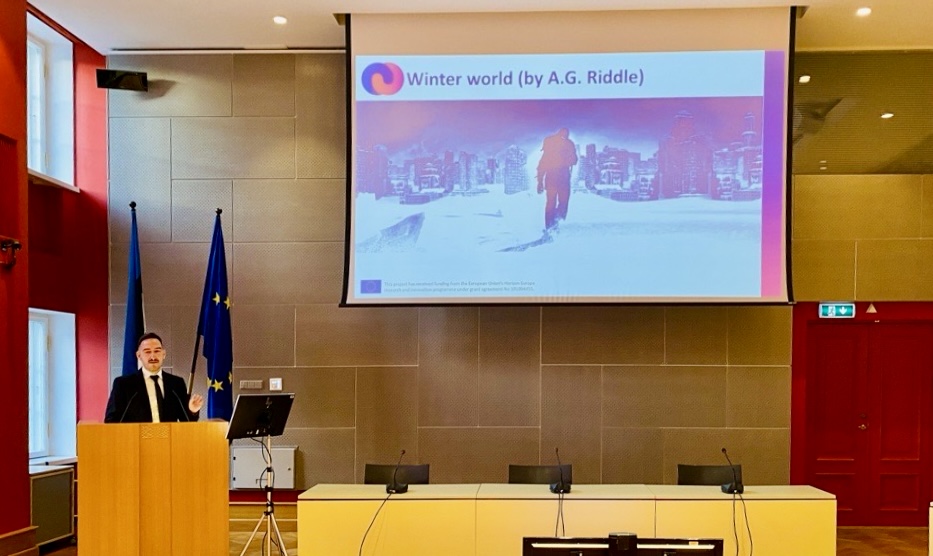
Matias Barberis, EFIS Centre and FutuResilience project coordinator, presented an overview of the project achievements, highlighting core learnings in terms of two project lines: knowledge valorisation and societal resilience. Matias presented the outline of knowledge valorisation archetypes, as emerging models for integrating and adding value to evidence and tools in policymaking process. Then, he presented an overview of resilience profiles, highlighting the main dimensions considered across the FutuResilience labs ecosystem while designing policies for societal resilience.
The final event moved on three lines of discussions:
Evidence in policymaking
Evangelia Petridou (NTNU Social Research) addressed the recurring gap between evidence and policymaking, noting how emotions often create a “policy bubble”. She reflected on the Context–Science–Context model, moving from broad societal challenges to evidence and back to real-world application. This presentation was followed by a cross-cutting conversation focused on urban climate resilience policies. Contributions highlighted the importance of improving data collection and governance (Murcia Lab – Fernando Garcia), understanding emotional responses during crises (TIMES Lab – Andrea Frabbi), and mapping specific vulnerabilities (CLIMAS & NAV Green– Anna Kotrikla).
The role of stakeholders
Connected to policymaking, the final event reflected on the challenging process of stakeholders engagement, acknowledging both successes and ongoing challenges. The Chios Lab (Asimina Christoforou) achieved meaningful involvement building on continuous presence on the field. The LiquidHousing Lab (Héctor Simón-Moreno) enhanced engagement building on existing networks of stakeholders, instead of reinventing parallel participatory processes. BAPEMED Lab (Venzislava Dacheva) illustrated the role of expertise and interests from different stakeholders along the process, emphasising the need to properly map this for effective engagement. The SCRL Lab (Luka Jelovčan) adapted its approach to scheduling difficulties by providing advance briefings before workshops. Finally, the invited project CO-VALUE (Tatiana Negurita) stressed the significance of citizen involvement, observing that the project successfully opened research and innovation processes to the wider community - and not to selected type of stakeholders, enabling market uptake of novel solutions.
The future
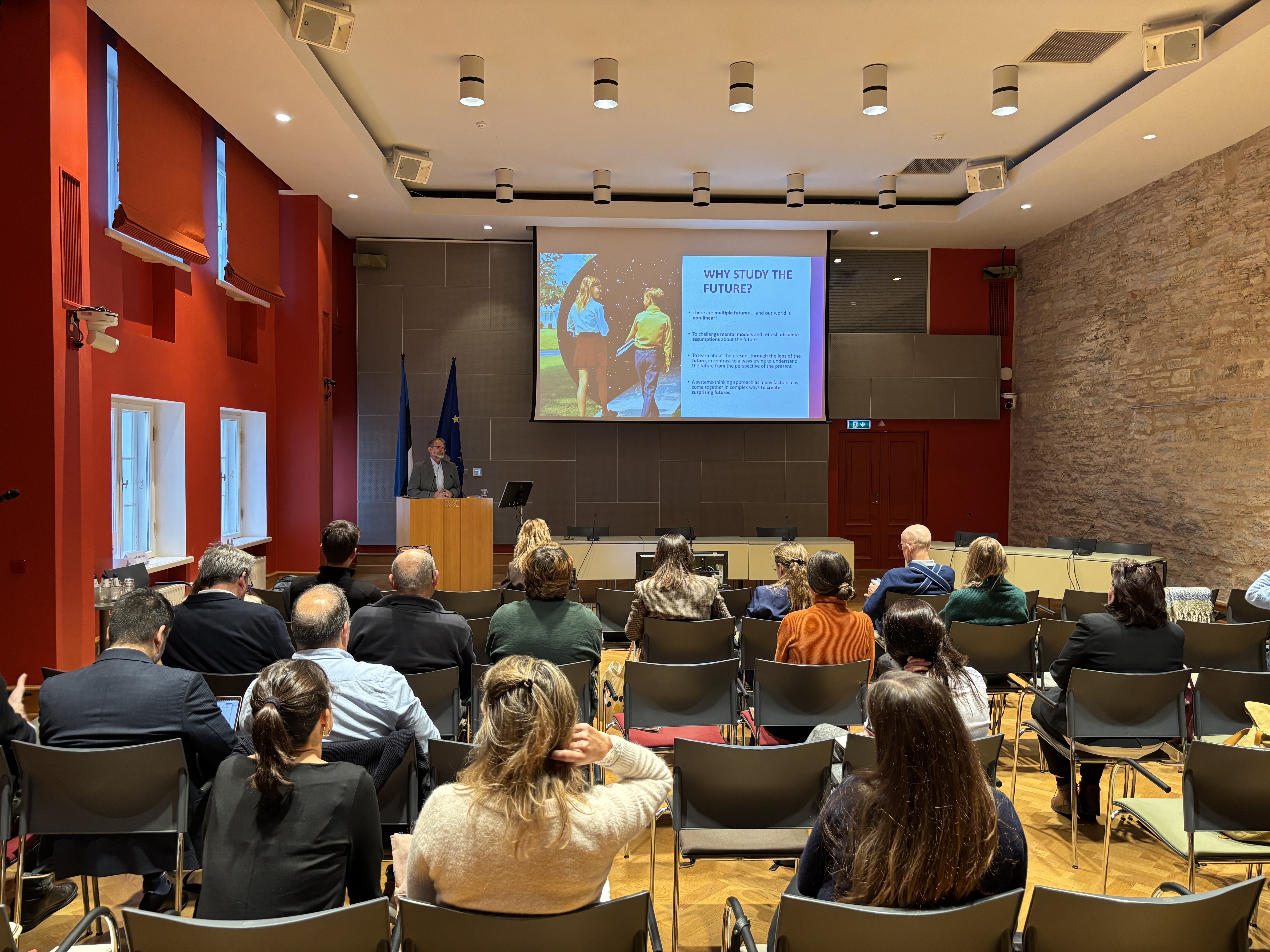
The event included reflections on foresight in policymaking from Martin Kruse (Copenhagen Institute for Futures Studies), who emphasised the need to plan for the future with a firm understanding of the past. He described foresight as a process that embraces uncertainty and explores multiple scenarios—distinct from forecasting, which depends on low levels of complexity. A crucial step, he noted, is supporting translation of developed scenarios into policymaking processes.
Another key dimension was the role of future in policymaking was the simulation exercises carried out as part of the project. Kari Pihl and Jörgen Sparf from the Risk and Crisis Research Centre (Mid Sweden University) presented the simulation, which enabled participants to design more grounded and actionable policies by engaging directly with a fictional yet realistic crisis scenario.
The final session showcased how creative thinking supports broader and more interconnected outcomes. Despite the lack of official translation in a cross-border setting, the Immer Lab (Emmanuel Muller) used alternative tools such as science-fiction narratives or real-time virtually simulated emergency communication to ensure inclusion between German and French participants. Janno Järve (Multilocal Lab) noted that creativity is essential for navigating poly-crises—such as housing affordability—while user-centred co-design tools fostered new ideas. Prototypes developed in the Fictions Lab (Maria Costa) as part of speculative design processes exemplified creativity in practice for manufacturing workers. The tetralemma method (Cosight – Marina Beermann) encouraged open and flexible thinking, while scenario-building tools enabled inclusive collaboration even among participants with no prior experience.
The discussions throughout the event demonstrated that resilience is not a fixed endpoint but an evolving practice requiring openness, participation, and long-term vision. As the project reaches completion, its findings provide a robust foundation for future initiatives committed to strengthening society’s capacity to navigate complexity and embrace change.
Press Release #6
Login to add a new comment